Key Takeaways
Industrializing XR is no longer held back by the headset, but by the platform behind it. Across aerospace, defense and energy, the ROI of virtual reality is proven. The real challenge now is scaling up.
Three underestimated costs slow deployment: CAD data integration, multi-site collaboration and data sovereignty. The answer is not better hardware, but an infrastructure built for XR, connected to engineering systems (PLM/CAD), flexible (cloud, on-premise, isolated) and centrally governed. Treating XR as an infrastructure building block, in the same way as an ERP or PLM system, is what sets apart the programs that scale.
Industrializing XR: the barrier is no longer the VR headset, it’s the platform
Across aerospace, defense, energy, and advanced manufacturing industries, a quiet consensus has formed in executive boardrooms: Extended Reality works. The ROI case for VR and MR in design review, maintenance training, and operational simulation is no longer theoretical. Organizations running mature XR programs report measurable gains, compressed development cycles, reduced rework, faster workforce qualification.
The business case is settled. XR is not an option, it’s a standard.
Yet a striking number of those same organizations are stuck. Having proven the technology in controlled pilots, they find the path to enterprise-wide deployment unexpectedly treacherous. Programs that worked beautifully at the proof-of-concept stage stall when confronted with the full complexity of a global industrial operation.
The diagnosis is almost always the same: the problem is not the technology. It is what is around it; data workflows, system integrations, cybersecurity, among other things.
XR, VR, MR and Data Sovereignty: Key Definitions
XR, VR, MR: what are we talking about in industry?
Extended Reality (XR) is the umbrella term covering virtual reality (VR), mixed reality (MR) and augmented reality (AR). In an industrial context, VR immerses the engineer in a full-scale digital mockup (design review, training), while MR overlays 3D data onto the real environment (assembly, guided maintenance). All these experiences rely on the same raw material: CAD data from engineering systems.
What does “data sovereignty” mean in industrial XR?
Data sovereignty is full control over the location, access and lifecycle of 3D models and engineering data. It answers a simple but critical question in defense or aerospace: where is my data physically stored, under which jurisdiction, and who can access it? It comes in three deployment modes: cloud, private server (on-premise) and a fully isolated environment, physically disconnected from any network.
From Pilot to Production: A Different Kind of Challenge
Moving from a successful pilot to a full deployment is not just a bigger version of the same thing. The questions change completely.
During a pilot, you ask: is it useful for my business? Does it bring real value? And today, the answer is almost always yes.
But once you try to roll it out across the organization, scaling raises a very different set of questions.
- How do we ensure data continuity between our engineering systems and our XR environments across hundreds of assets?
- How do we maintain governance and security compliance across multiple sites, networks and teams?
- How do we future-proof a long-term program against the rapid cycles of hardware and software obsolescence?
All the more so since using XR in an industrial setting can require several software tools (conversion, preparation, visualization, backup, etc.). These are not XR questions. They are infrastructure and governance questions.
The organizations that have successfully scaled beyond the pilot stage share one thing in common: they stopped thinking about XR as a set of applications and started treating it as a core infrastructure capability; the same way they think about their ERP or PLM systems. That shift in mindset changes everything.
Three Costs Nobody Talks About Before Deployment
When organizations budget for XR at scale, there are three costs that almost never make it into the initial business case but they add up fast.
1. Getting data in and keeping it current.
CAD files are complex and heavy. Moving them from engineering systems into an immersive environment usually requires a lot of manual steps: conversion, cleanup, version checks. At the pilot stage, someone handles it. At scale, with hundreds of assets and dozens of programs, it becomes a real bottleneck. This is exactly what an automated conversion of CAD data into XR assets solves.
2. Collaboration across sites.
The whole promise of XR in a global organization is that you can put teams from different countries into the same virtual space, enabling true multi-site collaboration in virtual reality. But without a shared infrastructure, every session starts with the same frustrating questions: who has the right file, in the right version, on the right platform? The overhead ends up eating into the time you were supposed to save. The value of an XR platform is not only about immersion quality: it lies in its ability to ensure everyone works on the same, up-to-date data at the same time.
3. Data security and sovereignty.
In sectors like defense or aerospace, you cannot just put your 3D models in any cloud environment and hope for the best. You need to know exactly where your data lives, who can access it, and under what conditions. Many organizations are discovering that the XR platforms they adopted during the pilot phase simply cannot meet these requirements at the enterprise level.
How to Evaluate an XR Platform Ready to Scale
Before committing to an industrial rollout, five criteria distinguish an enterprise XR platform from a mere demo tool:
- Native connection to engineering systems : does it sync directly with your PLM and CAD environments, without manual re-export?
- Deployment flexibility : does it support cloud, on-premise and isolated environments alike, on a single base?
- Centralized governance : can you manage users, versions and devices from a single console?
- Sovereignty and compliance : are data location and access rights auditable and compliant with your regulatory obligations?
- Longevity : does the architecture absorb hardware and software obsolescence cycles without jeopardizing the program?
If the answer to any of these questions is “no”, scaling will sooner or later hit that weak link.
The Infrastructure Layer Nobody Built (Until Now)
The answer to these challenges is not a better headset. It is a data infrastructure designed specifically for immersive workloads; one that sits between your engineering data and your XR experiences and makes everything work together. What does that look like in practice? Three things.
A direct connection to your engineering data (PLM/CAD)
When a design changes in your PLM or CAD system, the XR environment should be updated easily (even automatically).
Deployment flexibility: cloud, on-premise or isolated
Some programs can run in the cloud. Others need to stay on a private server. A few require complete network isolation. The ideal platform must be able to handle all three cases, together or independently.
Centralized governance of users, versions and devices
Many organizations are managing their XR deployments experience by experience, team by team, site by site. That creates duplication, inconsistency, and risk. A single governance layer, where you can see and control everything from one place, is not a nice-to-have. It is a requirement for scaling.
The Decision Behind the Headset
It is easy to focus on the visible part of XR : the hardware, the experience, the demo that impresses in the boardroom. But the organizations that are building a lasting advantage are focused on what is behind it. That virtual reality has become a must-have of Industry 4.0 and 5.0 is no longer up for debate; the competitive advantage now lies in what makes it industrializable.
Infrastructure is not just what makes XR possible. It is what makes it last. A design review running on a governed, continuously updated, secure platform is a strategic asset. The same review running on a disconnected pilot instance with unclear data provenance is just an expensive demo.
The question for any executive leading an industrial organization today is not whether to invest in XR. That decision is already made. The question is whether the infrastructure underneath it is built to last.
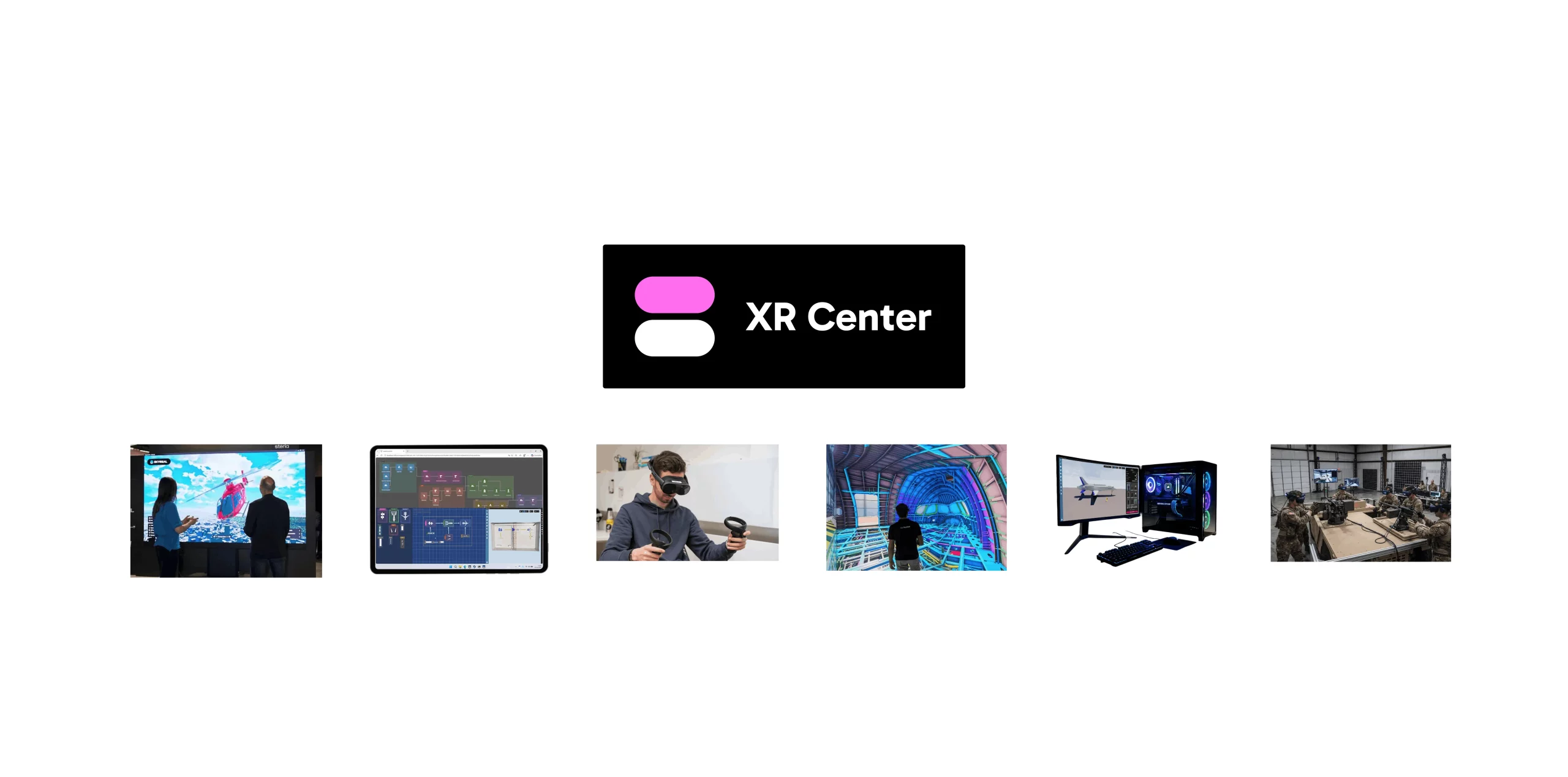
That is precisely why SKYREAL is relentlessly pushing XR Center forward. We are continuously developing the platform to offer an increasingly robust answer to these challenges, because we have been seeing this shift for a long time, as industrial organizations move from early adoption to full-scale deployment.